Nomadness

Tales of the new direction at Nomadic Research Labs... the move to a ship named Nomadness

My Photo
Name: Steve Roberts
Location: Camano Island, Washington, United States

Thursday, May 15, 2008

Plumbing

All those pithy aphorisms about boats and expenses really are true. I expect this with new nautical gizmology, of course - loading 'er up with NavNet 3D, communication, and NMEA 2000 goodies involves enough money to buy another sailboat - but even the pedestrian stuff involves one gotcha after another.

Take plumbing, for example. Not the most interesting topic, but as we get closer to taking off it became clear that, at a minimum, we should reverse-engineer the tangle of hoses between heads and thru-hulls just to make sure that waste ends up where it should. After a few hours of investigation and no help from the former owner, it appears that this is what we have: two Lavac heads (good) with two Y-valves each (hmmm) allowing a choice of three poo-destinations... direct overboard (OK offshore), LectraSan processing and then overboard (mostly illegal inshore), and mystery inaccessible 20-gallon holding tank with only deck pumpout (bad enough that the previous owner didn't use it). In other words, the system sucks... and I certainly would have appreciated hearing about this from the surveyor as it would have been a negotiating point!

So the latest addition to the project list is a new 30-gallon holding tank under the forward berth, to which the forward head is pumped by default. It can be emptied via deck pumpout or macerator pump overboard, and will have an inspection port, vent, and level sensor. (Even getting to the existing one would involve invasive surgery, so we'll just seal it off and call it a flotation compartment.) The original system of two widely separated heads sharing a LectraSan was dubious to begin with, and the little sewage-processing machine hasn't worked since I bought the boat, so that's going away as well.

One thing the surveyor did notice and communicate to the insurance company is that the boat has a TEE in the propane line after it enters the living space... a no-no these days per ABYC standards. It also has a Bosch demand water heater with standing pilot, now illegal. So those are both going away, the propane is being moved to a deck box with a single line to the galley stove, and a new water heater that meets current standards is being installed in the shower compartment.

I really prefer the fun stuff, all of which is either in progress or on order... field radio pack, communication console, NMEA 2000 network, Furuno NavNet 3D system. Even packaging the mobile lab and provisioning the galley are fun, and feel like progress toward launch. But re-doing a sewage system to be legal and functional is a constant reminder of the perils of boat-buying and the general uselessness of brokers.

Meanwhile, it's finally just starting to feel like Springtime here in the northwest, and what I really want to do is go sailing. All of this should have been done during the grim demotivating winter that seemed to drag on forever, but you know how that goes... over 6 months have passed with the boat in a slip, and we're just now getting the infrastructure up to snuff!

Cheers,
Steve

Sunday, March 23, 2008

Standards and Simplicity

I've been posting weekly to my "live page" with random noodlings about how to proceed with system integration, and lately it's been clear that once a course is set, I should move the narrative over here. After all, a blog is archived, RSS-able, prettier, and even generates occasional clickage. Friends remind me that we are now in the 21st century and blogs are the way to go... though I persist in believing, perhaps anachronistically, that nobody in some distant tomorrow is going to care much about the uncertainties of yesterday. (Frankly, I still miss the old Microship Status Reports that went out by email!)

All of which leads directly to this posting. Quite a lot is happening, including the arrival of my First Mate, acquisition of the ship's radios and comm systems, a major upgrade to the lab, a decision on the on-board server, woodstove installation, and selection of a vendor to handle the nav/autopilot/instrumentation systems... so I guess I better start being a bit more forthcoming with bloggage or I'll never catch up.

There's an interesting set of meta-issues driving design decisions that will in turn affect many years of my life. It's not just a specs game; it incorporates philosophy, cultural extrapolation, notions of sustainability, and recognition of geek expressionism. Take the issue of standards, for example.

I have a real distrust of non-open architectures and protocols, and this is my biggest red flag on the NMEA 2000 approach despite its obvious technical superiority compared to the dated clunker that is the old hobbled 4800-baud serial stuff. I'm reminded of PACTOR... I spent, what, $1200 for a circuit board in a box, all because they managed to lock-down a communications protocol that is now, ironically, even being used on ham radio? That business model is ultimately a disservice to the marketplace, even as the huge profits drive their own development and yield admittedly excellent products. It's good for their company, but is also an effective barrier to innovation since the infrastructure is proprietary, the standards de facto for HF email, and there is no room to experiment beyond what a friend called the "science project" level.

NMEA 2000 is obviously not that bad since it's CAN-based and a lot of people are buying into it for plenty of good reasons, but it does make me a little nervous that I might find myself with an on-board network that has a high cost-of-entry for would-be players in the market, preventing competing products from appearing in response to needs (just getting a copy of the standard is prohibitively expensive for the experimenter, and some vendors make it even worse by implementing their own non-standard backbone connector variants). Proprietary protocols may seem to be robust because of their carefully controlled evolution and optimization within a product line, but if we have learned anything over the years, it's that buying into a single-vendor "standard" can be painfully expensive when you later want to upgrade (that is happening to me now on the boat).

In a somewhat grander sense, closed standards can also be sidelined by a lightweight and agile alternative that incorporates the self-correcting nature of a large community (think Linux), thus lowering costs for everybody. On the other hand, "geek boaters" are not a large enough community to ever reach open-source critical mass, so this is a purely academic rant, and a distraction from the more pressing issues like Maretron vs Simrad vs Furuno vs Raymarine vs Garmin. Frankly, the best thing that could happen would be for someone to fully reverse-engineer NMEA 2000 and publish it widely, allowing any small player with a good idea (even homebrewers) to create new widgets or introduce competitive pressure to the current high-priced market. There is a fine line between the two primary effects of an industry standard: simplifying things for customers and protecting vendors from competition. The fact that we are already seeing proprietary variants in backbone cabling is proof that some companies are still playing by the old rules, trying to lock-in customers instead of focusing on making better products.

Anyway, armed with those observations, we can at least make our purchase decisions a bit more wisely, hopefully encouraging true standards adherence.

One of the inevitable projects will be the gateway between the NMEA 2000 network and the ship server. Maretron actually makes a box that does this (with corresponding Windoze code, of course, looking very VB-ish), but how hard could it be to slurp a feed off the USB port and incorporate into a Rails environment that is already wrapped around a hierarchy of sensors and a web front-end?

And that leads to an update in the system department. I've been assuming all along that there would be two computers in the geek console - a Mac Mini for music and productivity applications, and something of the ITX flavor (running Linux) for the data collection and control. This of course led to kluges like a KVM switch to share a single LCD, but it seemed both inevitable and culturally correct. Lately, however, I've been re-thinking this in response to a craving for simplicity coupled with reader comments on the live page... and I'm now leaning strongly toward dropping the Linux box and letting the Mac Mini do all the work. Not only is it much more familiar territory, but my recent attempts to get educated in the other platform have run into dead ends (ignored emails to vendors and no response to forum postings). I'm actually finding this quite liberating.

I'm looking at Ruby on Rails for this, since the problem is really one of integrating database and web server. Clients include the web front end accessible anywhere (mirrored on land for public consumption, of course), the DTMF/speech tool via UHF ham radio, a very simple console LCD/keypad for configuration switching, and a command-line interface that I can reach through packet. The Mac would be on most of the time (reported to be 13-20 watts), but can frequently be put to sleep when data is sparse and a microcontroller can keep an eye on security bits... frantically conjuring the magic packet to wake the Mac via LAN (or hell, yanking a hardware chain to take the router out of the loop) when it concludes that it's in over its little head.

All of this leads to the issue of simplicity. I recently loaned The Cost Conscious Cruiser by Lin and Larry Pardey to my partner... it's an excellent and pragmatic book that offers a wealth of tips from their efficient life afloat. She wrote: Of course, I trust you and your choices, but do find it interesting that you suggested a book that advises against much of the equipment that you are paying fortunes for. This is an excellent point, and needs to be addressed. I replied:

A fair comment.

I try to learn from wise folks all over the map - like Jerome Fitzgerald and his all-sailing purism, the Pardeys are known minimalists who take pride in ultimate simplicity. That's not really me, but I sure can learn a lot from them; by taking that approach and really living it, they have developed wisdom that maps well to anyone on the water. My suggesting the book is not to imply that I see them as a blueprint, however.

Somewhere is the balance between the extremes, and I feel that I'm in the ballpark after a few false starts over the last decade. By choosing a steel sailboat that can be single-handed, I'm already trending toward lifestyle scalability, even though that involves some hardware that as not as reliable as what Lin and Larry advocate.

I am also careful to think in "layers," which you can visualize as successive wrappers that add functionality without being absolutely essential to staying alive and afloat. That's why I have a sextant, will keep simple DC switching of navigation lights, and like the stand-alone Furuno radar even though I can't merge its display into the chartplotter. Even the choice to install a woodstove (expensive and probably very much in the way) is a balance between pushbutton convenience (Webasto) and the ability to adapt long-term to fuel scarcity and the need for self-sufficiency.

So through all this, I listen to the gurus. At one extreme are the books mentioned above and the tales of minimalists who have circled the globe (Moitessier et al). At the other extreme, we have Ben the marine electronics guru, the tech-heavy Dashews, and the clear systems advice of Nigel Calder. I pick and choose to find the balance that works for me... sustainability tinged with the buzz that comes from life on the technological cutting edge.

This is getting long, and gritty tech details belong on static pages even though I'm itching to write about the emerging design. I do need to blog soon about the suite of comm tools, though - it's a mix of radios and related toys that maketh this old ham ticker to go pitty-pat. Now I just want to get to the point where I actually have time to play with it all.

73 and Fair winds,
Steve
N4RVE maritime mobile (soon)

Sunday, December 16, 2007

Datawake, Shacktopus, and Nomadness

Now that Nomadness is parked in a yacht club slip for the winter (with a Spring deadline to vacate since I'm on the reciprocal dock), there is a kind of clarity that is unfamiliar around here: an actual deadline.

Specifically, I have about 4-5 months to do whatever I need to do that requires dockside facilities like shore power and easy access, including contractors. This means that the hard projects need to get done first, and it's a challenge to keep tearing my mind away from seductive linux boxes with USB-connected I/O and integral web servers... even though I'm already partly there with an on-board EVDO router and Axis webcam. Yes, the boat has a net connection, and is my wireless access point when I go aboard.

The link is via Sprint EVDO flat-rate unlimited service, with an on-board Wi-Fi router and an external marine dual-band cellular antenna driven by a 3-watt amplifier. The EVDO card can pop out of the router and into my Mac for mobile use, and I was able to watch YouTube vids while driving up I-5 (I was the passenger). Performance is roughly DSL speed. Here are the major parts:

Shakespeare dual-band marine cellular antenna
Sprint Novatel EX720 EVDO card
Top Global EVDO Mobile Router
Wilson 3-watt bi-directional dual-band amplifier

So that should take care of the basic coastal net connection, augmented at one extreme by my Linksys WET-11 and Radiolabs yagi when close to a (faster) Wi-Fi hotspot, and at the other by the Icom M802 marine SSB radio with PACTOR modem for Sailmail... with emergency backup in the form of pricey voice/data access via satellite.

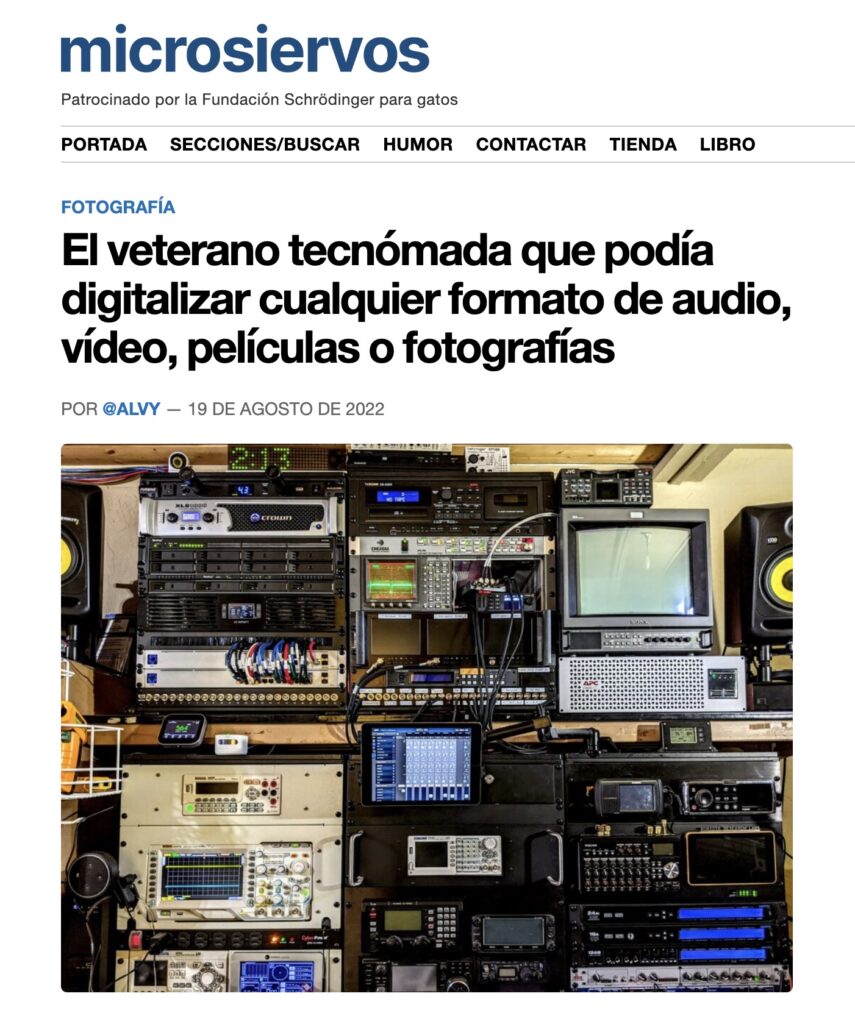
Still, that is not urgent right now (except when I'm on board and really need to snag a PDF of something, or peek from home at the webcam during a windstorm to make sure the view out the pilothouse window hasn't changed too much). What is more critical at this stage is the suite of mechanical projects that involve making messes and dragging lots of tools back and forth. Among other things, this project category includes installation of the new Katadyn 40E watermaker to replace the long-dead one that came with the boat, building and populating the communication console at the original nav station desk, installing the Little Cod wood stove so I'm not tied to Big Oil for basic survival heat, replacing a sick Robertson AP100 autopilot with something that works, setting up the davits to support the 10' Navigator dinghy, installing the Outback MX60 solar charge controller and the initial PV modules, installing a few more antennas on the radar arch, swapping out a perfectly good demand water heater with one fired by piezoelectric igniter instead of pilot light (damn insurance rules), taking care of a few minor fixes, and doing the initial provisioning. <groan>

Meanwhile, of course, I continue to lay the groundwork for the geeky bits... mostly associated with the embedded system that takes care of data collection and security, bringing all the "data points" around the ship into a coherent user interface. That machine, echoing a much earlier project spawned during the Microship era, will be known as Datawake.

The current design interfaces with the boat via a collection of USB I/O widgets beginning with a couple of low-end National Instrument 6008 USB data acquisition modules (2 of them at the moment). These live on a USB hub, and connect to a nanoITX box running one of the small Linux installs like DSL that can be contained in a compact flash card or other non-rotating media. Ned Konz has written a Ruby module that interfaces the corresponding drivers with a web server, and from there it's just a matter of HTML and simple coding to present any of the data in the form of a web page. There will likely also be an "always-on" microcontroller that draws almost no power, taking care of security and watchman duties... probably the MAKE Controller that has been sitting here for almost a year, awaiting its destiny.

The Linux box itself is ethernetted to the boat's router, along with the other major network components (the 4-port video server, the stand-alone camera, and the embedded Mac Mini that is the main ship computer for comm/nav/writing/etceterizing. Laptops talk to all this via wireless LAN, and the outside world gets to it, with authentication, via a dynamic DNS service and explicit port addressing. A land-based server will mirror a version for public consumption so that the boat's EVDO link doesn't get hammered when Dugg or Slashdotted.

The other major system on board is Shacktopus, a project that has been on hold ever since I had to dash off to Kentucky in 2005 to shut down the old homestead. This is heavily communications oriented, and is a layer atop the radio and telemetry gear (and well integrated with Datawake, of course). Among other things, this is what will handle voice/DTMF interaction with the boat via my backpack radio, as well as bringing the whole suite of comm tools into a consistent user interface, snag net connections and move mail in the background, and otherwise tie things together. Given the close coupling between the two toolsets, they will most likely live in the same cheap, low-power hardware environment... it's not like we're hurting for clock cycles!

That's all seductive and consistent with the decades of work leading up to this, but the immediate projects are more pedestrian, involving plumbing, wiring, purchasing, and reverse-engineering what's already in place. (To that end, I just picked up a Brady ID Pal labeling tool, which is particularly good at making wrap-around cloth labels for wires... it's a jungle in there!)

While all this is going on, now that the clock is ticking more loudly and I actually have a boat that can take me offshore, I've been cranking up the tonnage-reduction. Want some stuff? See my live page (updated every few days) for the endlessly amusing variety of stuff that really needs to find new homes. It's obviously not all going to fit in here:

Sunday, October 07, 2007

A Touch of Newmadness

If a man must be obsessed by something, I suppose a boat is as good as anything, perhaps a bit better than most. A small sailing craft is not only beautiful, it is seductive and full of strange promise and the hint of trouble. If it happens to be an auxiliary cruising boat, it is without question the most compact and ingenious arrangement for living ever devised by the restless mind of man—a home that is stable without being stationary, shaped less like a box than like a fish or a girl, and in which the homeowner can remove his daily affairs as far from shore as he has the nerve to take them, close hauled or running free—parlor, bedroom, and bath, suspended and alive.

- E.B. White

And so it begins, for real this time. What I learned from Microship-on-Steroids is that I need not a rocketship, but a substrate that's almost industrial in robustness, yet still graceful and balanced. Not a "work boat," in other words, but a voyager built to work-boat standards.

The deal is done, and my first time out was the delivery run (with two wonderful friends aboard), taking her from her old digs to the new winter moorage. Given my propensity for jumping into things with both feet, it is entirely appropriate that there was a small-craft advisory, with 25 knots of wind on the nose and a vigorous flood current behind us...


Despite burying the bow in square, closely spaced stacks of waves, we took not a drop in the cockpit or below. Steering was decisive, the Yanmar turbo diesel purred softly, and going forward (whether above decks or below) was surprisingly secure. The pilothouse was comfortable as well, with the Webasto heater keeping things toasty and a joystick with rudder position indicator making steering easy. Though it wasn't needed, I checked the radar to confirm that proceeding in the fog would be at least possible, and the instruments were faithful and consistent.

The trip had it's "arrrh, matey!" moments, of course; how could it not? Them what died was the lucky ones. I'm actually rather glad it was a blustery, somewhat scary day and not a sunny millpond; it felt like a mini-voyage with fast-moving current and a hard biting wind (a good thing to get familiar with, as I intend to do a fair bit of winter sailing here in the Pacific Northwest to further learn and bond with the boat before going full time).


The new S/V Nomadness is now parked in her slip, and my job for the next few weeks is to move the basics aboard, figure out where everything is, learn the essentials of maintenance, and—very soon—make a solo run down to the nether reaches of Puget Sound. Then will begin the projects, though fortunately all of them are layered atop this robust and well-found steel vessel.

I'll close with one more classic quote to capture the feeling of this phase:

"I've always wanted to sail to the South Seas, but can't afford it." What these men can't afford is not to go. They are enmeshed in the cancerous discipline of "security." And in the worship of security we fling our lives beneath the wheels of routine—and before we know it our lives are gone.

What does a man need—really need? A few pounds of food each day, heat and shelter, six feet to lie down in—and some form of working activity that will yield a sense of accomplishment. That's all—in the material sense. And we know it. But we are brainwashed by our economic system until we end up in a tomb beneath a pyramid of time payments, mortgages, preposterous gadgetry, playthings that divert our attention from the sheer idiocy of the charade.

The years thunder by. The dreams of youth grow dim where they lie caked in dust on the shelves of patience. Before we know it the tomb is sealed.

Where, then lies the answer? In choice. Which shall it be: backruptcy of purse or bankruptcy of life?"

- Sterling Hayden

Saturday, September 15, 2007

Nomadness, Reloaded. Again.

A lot has happened since my last posting, in which I had reluctantly concluded that the trimaran was for sale. Among other things, she has indeed been sold... and just completed an inaugural voyage with her new Canadian owner (ironically, right back to Desolation Sound via Cowichan Bay, Pender Harbour, and Nanaimo).

I write now on the eve of sea trial and survey of what might be my new ship after a long and exhausting quest (with which I didn't want to bore you; hence the long silence here). The process was as stressful as could be imagined, and is certainly not over yet... next week the experts examine her closely to find non-obvious system problems, turbo-diesel quirks, hull anomalies, creeping corrosion, rig imbalance, and any mismatch 'twixt contracted price and reality.

Once all this is over, I'll either run away (as I have before at this point) or proceed toward closing... and just in case the latter occurs, I went ahead and secured a slip for the 6-7 months of dockside projects before going on the hook for a season of exploring Northwest waters. And after that? Either a gradual widening of range until I'm ready to cast off the metaphorical mooring lines of home base tonnage, or that long-imagined leg out the Strait of Juan de Fuca, followed by a left turn and the beginning of a global voyage after the requisite rendezvous with the Baja Ha-Ha.

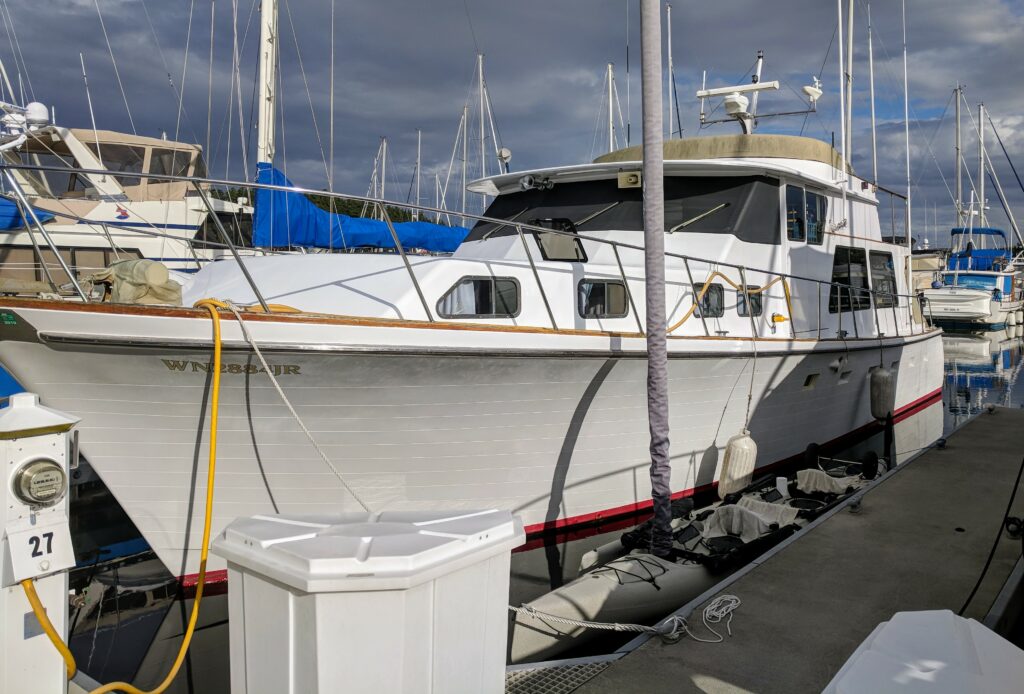
Anyway, I'll refrain from extensive details until I know one way or the other whether this is the boat, but here's a teaser: she's an Amazon 44 steel raised-salon pilothouse cutter, a robust substrate for geeky goodness that was built to handle the rigors of circumnavigation. She carries a double-spreader high-aspect rig with in-mast furling loose-footed battenless main, and standing rigging is stout and redundant. There are lots of interesting features, but all that can wait, blog-wise, until I know whether she is to be mine.

Here she is at the dock during my first showing:


Much more soon (as well as a revamping of the Nomadness site to reflect the new boat, which may or may not keep the same name. I'm also considering Irony, a play on the hull material as well as a setup for the dinghy and kayak monikers (the other two members of the holy trinity: Entropy and Recursion).

Thursday, June 21, 2007

Musical Boats

Long-time readers of this blog know why I haven't posted in a while... it's annoying to archive months of hand-wringing and analysis over what to next (so I mostly do that over at my live page, where new updates banish old ones to the bit bucket). I've spent a few months juggling the trade-offs of a variety of facilities including a row of shipping containers, modified semi-trailers, a thorough revamping of my moldy lab in the forest, a new sunny shop stylistically consistent with the house, and a grandiose 5,000 square foot building with multi-source hydronic heat and a boat bay that can hold the trailered Nomadness.

Somewhere along the way the facilities obsession started to feel like a bit of a distraction from the real point of all this, which, as I recall, had something to do with getting my sedentary butt (before it's too old to get in gear) back onto a boat where it belongs.

So I shelved the building issue and spent a few weeks engaging in what they call "soul searching" but is really a sloppy mish-mash of wall-staring, list-making, ear-bending, book-reading, and truth-admitting. And ya know what? I don't have the right boat.

Before you roll your eyes and mutter, "oh, jeez, here we go again," consider: once I accepted that the mission profile had evolved in 15 years to the point where tiny Microships were no longer my substrate of choice for full-time adventure, the whole technomadic landscape changed. Last year, in a rather abrupt reversal from the course of ship-questing that included such expensive near-misses as the massive project boat and corresponding education in the wiles of (some) yacht brokers, I bought this exquisite Corsair 36 trimaran and instantly took off for a month of single-handed adventure. And man, was it sweet...

So I returned with a big list of projects and set about trying to figure out how to wrap a lab around 50 feet of folded beauty, as winter settled in and relentlessly hammered the island with the worst windstorms and snow in a decade. I started learning to play the piano, set up a studio, went through a major relationship change, switched kayaks to something that would fit on the Corsair net, created an intermediate set of Shacktopus design objectives called Kayaktopus, and kept drawing pole buildings as the world again turned green and the water beckoned.

Oh. Right.

My intent, in a nutshell, is to conjure a self-sufficient nautical escape pod that has the capability of supporting full-time global voyaging (though there is no particular travel plan). There are lots of reasons for this, but that's not the point at the moment. The fact of the matter is that I'm a 6'4" guy with lower back problems and lots of gizmology (purists might dismiss the latter and say "just keep it simple and go, you idiot" but it's the geeky integration that makes this fun for me... so the on-board lab is non-negotiable). As much as I love this sexy trimaran parked in my yard (and as capable as it is compared to a Microship), it's just not big enough for my current and anticipated needs. Nomadness is a sleek and fast racer-cruiser, highly effective adrenaline generator, head-turner, and agile explorer... but I could never truly live aboard year-round, and building systems to do so would only be postponing the inevitable.

So yes, here we go again. She is for sale, and the ship quest has resumed. I'm also not going to put up any new buildings (just improve the old one as needed to make it more usable, rentable, or saleable).

One very nice side effect of all this is that the vast pile of stuff no longer floats among a bunch of ambiguous categories like "might need if I build a new lab" and "better keep in case I ever really settle down." Now it's just: home base, boatable, or unnecessary.

Funny how this whole Camano Island interlude is now closing in on the ten-year mark; I came here at the beginning of 1998 to finish the Microships and get moving. William Least Heat Moon was right. The wanderer's danger is to find comfort.

Wednesday, February 07, 2007

Incremental Progress

I was just sitting here thinking of some kind of simple logging application to help provide an objective external record of my progress toward Nomadness, when it dawned on me (duh) that it's already right here. I have historically viewed blogs as a sort of upgraded tool for publishing static content, but it will be much more interesting (and useful as a live project document) if I shake off that mindset and start tracking progress more actively. This has been suggested before, but old habits die hard.

OK, I'm going to try it... with less effort to polish these postings and much more attention to simply recording day-to-day activity. The "articles" belong over in the Nomadness archives anyway.

I went to the Seattle Boat Show last week with my friend Dave Robb, and my first act upon walking in was to take a plunge I've been planning for a while. Given the size of the nets (tramps) on Nomadness and my need for an alternative to the capable but poky dinghy for local exploration, I've been planning to acquire another kayak... shorter and more "turn-key" than the venerable and much-loved Bubba. So I did it. Arriving soon is my new Hobie Mirage Revolution pedal-powered kayak, and I have a local buyer for Bubba (an Aire Sea Tiger inflatable that I have had for 3 years). It ends up being pretty much an even swap, so it's not too painful financially, but I have lots of fond memories that give the familiar boat character... and it is surprisingly hard to let go. I hope the new one comes to feel as "personal" as did Bubba, which was a wonderful combination of kayak-camping and day-trip boat as well as being easily transportable without racks and other hassles. Comfy, too. <sigh>


I'm sure I'll have photos and other comments shortly after the Hobie arrives around the end of this month.

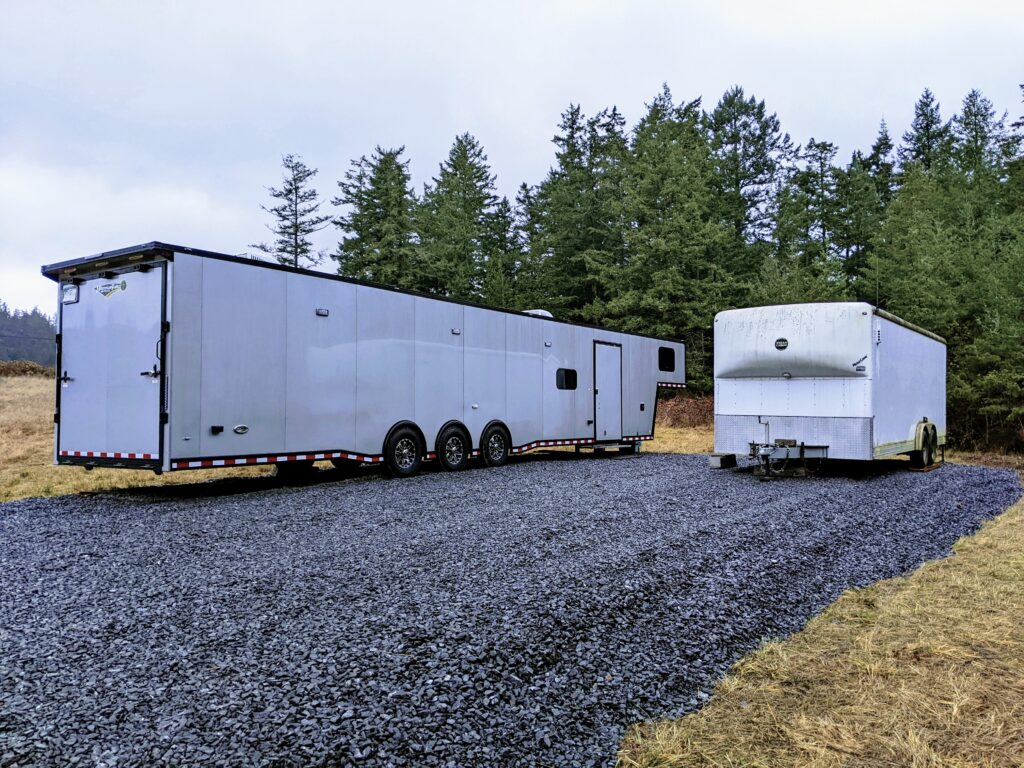
To bring you up to date on the larger issue, I need to comment a bit on the facilities. I've gone around in circles on this a couple times, basically trying to figure out how to set up a place to work on the boat (which has been sitting more or less untouched on her trailer since the haulout). Last week, I was pretty well convinced that the right approach was a 48-foot "reefer" semi-trailer for a mobile lab, my existing Wells-Cargo 24-footer for the gear staging area, and a temporary fabric tent suspended between two mast-hoisting gantry cranes. This plan also involved a bit of site prep and gravel, 200 feet of fencing to reduce mutual visibility of a too-close neighbor, and a significant project setting up new facilities in the Big Rig.

Sometimes I really have to try these things on and live with them in my head for a while before reluctantly admitting their absurdity. I already have a 3000 square-foot building that is almost completely dormant. Perhaps I should use it.

Of course, there are a few problems to solve... but it will be cheaper and quicker than the other approach. I have serious humidity problems; the same contractor who failed to install a rodent-exclusion flashing also poured the concrete over sand without a vapor barrier... meaning that I have moisture migration from below as well as condensation from atmospheric humidity (the latter would be the case even with a vapor barrier, so it's not all their fault). The obvious fix may not be effective: many concrete-sealer products will fail in these conditions, bubbling or breaking down. The other approach, favored by Ned's research last year as well as a number of building-science resources, is to lay down something impermeable (sheet or insulation), place 2x4 floor joists, and bond on some tongue-and-groove plywood flooring. This will not only block the moisture, but make the whole place warmer... though I'll probably need to be careful about what's going on down there and maybe do some active venting.

The rest of the plan is simpler and lends itself to familiar techniques... finish the insulation retrofit that started during the rodent fiasco, wall off a couple areas that need to stay clean and warm (electronics lab and gear staging areas), and accelerate the reduction of excess stuff (a process my old friend Frank Feczko used to call "SRE" - Simplify, Reduce, Eliminate).

Current status on all this is a crude sketch and emails to friends who know more about concrete and building techniques than I ever will... and I've already started speeding up the SRE!

More soon on all that; in the meantime, here's an ugly first-pass sketch (yes, I know there are CAD tools; I even have Google Sketch-Up, but this was done on a clipboard while walking around the lab yesterday). The overall floor plan is 40x56 feet (scale is 2' per graph paper square), and this does not include the 13x56 suite of offices upstairs. The long bay at the left will be walled off and already has the good heat sources (Miss Piggy the woodstove as well as a monster propane-gobbling "unit heater"), and will be the lab. The middle area is an open work bay for big stuff, as well as the, um, "shrine" for Microship Wordplay. To the right of that is the machine shop; against the back wall at the bottom is the inventory shelving, and in the upper right is a walled-off area that is devoted to all the stuff that's actually going on board the boat. A door from this leads directly to Nomadness.


Cheers from the nomadhouse,
Steve